Solving Pensacola, FL Standing Water With Asphalt Repair: How Proper Culvert and Drainage Prep Extends Asphalt Life
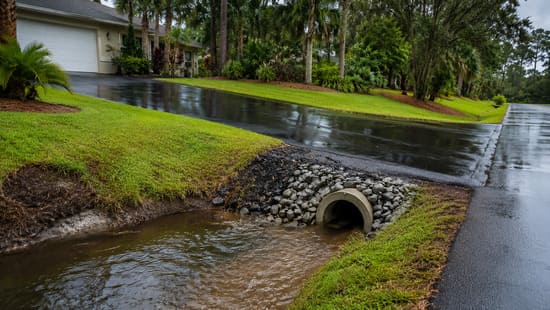
Heavy Gulf Coast rain can turn a healthy driveway into a maze of soft spots and cracks. If water sits on your pavement or along the edges, it seeps into the base and eats away at the foundation. That is why homeowners who plan asphalt repair also plan drainage. When you match culvert and ditch prep to local runoff, your surface lasts longer, looks better, and stays safer.
If you are comparing options for asphalt repair Pensacola, FL, keep reading. This guide explains why standing water is so destructive, how driveway culverts support the base layer, and what a local crew does to protect your investment in our sandy coastal soils.
Why Standing Water Destroys Asphalt In Pensacola
Our area sees frequent downpours, fast-moving thunderstorms, and tropical systems. Water finds every low spot, then works through tiny gaps into the base. Sand and shell subgrades found across East Hill, Cordova Park, Ferry Pass, and Warrington can shift when saturated. As the base loses strength, the asphalt flexes too much and starts to ravel or crack.
Standing water shortens pavement life because it creates pressure cycles. Sun and traffic pump water in and out of the base. Each cycle breaks the bond bit by bit. Over time, you get potholes, edge breakup near the grass line, and tire depressions where runoff lingers after storms.
- Small puddles that stick around 24 hours after rain
- Edge crumbling where the driveway meets the yard or ditch
- Washboard dips at the street tie-in
- Sand or soil streaks washing across the surface after a storm
These are not just cosmetic. They are warning signs of water getting beneath the mat and weakening the structure that actually carries the load.
Culvert And Driveway Drainage Basics For Long-Lasting Asphalt
On many Pensacola streets, the ditch and driveway culvert do most of the stormwater work. When they are sized and set right, water moves away from your driveway quickly. When they are too small, too high, or clogged, water backs up and soaks the base.
Sizing And Placement That Matches Local Runoff
Driveway culverts should pass neighborhood runoff without forcing water to jump the banks into your yard. In practice, that means a culvert with the right diameter, good inlet and outlet alignment, and a stable bed so it does not settle. Undersized driveway culverts fail fast during Gulf Coast downpours. A local crew checks upstream and downstream ditch grades, sets the pipe to the correct slope, and shapes the shoulders so water cannot scour the edges of the asphalt.
Base Layer Stability In Florida Sand
Asphalt only performs as well as the base beneath it. Along the Gulf Coast, base strength depends on drainage more than thickness. A stable granular base that drains will outlast a thicker asphalt layer over soft, wet soil. Stable base beats thicker asphalt every time. That is why crews in Pensacola focus on ditch shaping, compacted subgrade, fabric where needed to keep sand from migrating, and well-compacted base rock that sheds water to the sides and toward the culvert.
Protecting The Asphalt Edge
The edge is the most vulnerable part of a driveway because there is no support outside the mat. Good drainage design protects this edge with gentle shoulders, compacted fill, and a slight crown or cross-slope so water runs off instead of sitting at the joint. Where a driveway meets the street, a smooth tie-in prevents a lip that traps water and causes raveling at the transition.
How Proper Culvert Prep Extends Asphalt Life
When culverts and ditches are prepared correctly ahead of resurfacing or patching, the pavement drains fast and the base stays dry. That slows oxidation, prevents rutting where puddles form, and limits freeze-thaw effects during those occasional cold snaps. It also cuts down on edge breakup caused by sheet flow across lawns and driveways.
- Fewer potholes because the base resists pumping and erosion
- Cleaner edges because runoff is guided away from the mat
- Longer life between patching or overlays thanks to a drier base
- Smoother tie-ins at the road, which reduce cracking at the seam
If you want a deeper dive on surface care after the drainage work is done, check out our local guide to asphalt repair and maintenance tips. It covers sealing, traffic timing, and how to spot early wear before it spreads.
Preventing Potholes In Florida Sand And Stormwater Runoff
Our sandy soils drain quickly until they do not. When rainfall overwhelms the ditch or pipe, the base gets wet and starts to move. That movement creates voids under the mat. The next truck tire finds the weak spot and the hole opens up. The cure is not thicker asphalt. It is smarter water control at the driveway.
That is why Brynco Home Improvements LLC looks at the whole picture before any patching or overlay. We verify ditch depth and shape, check culvert alignment, confirm outlet capacity, and make sure the base has a clear path to drain. We also look for signs of erosion at the ends of the pipe and along landscaping that could undermine the edge over time.
What A Professional Asphalt Repair Crew Checks First
Pensacola homeowners often call about “soft spots” that bounce underfoot or crack again after a quick patch. A thorough site review finds the root cause. Here are common checks our team performs before recommending a repair plan:
- Water paths during a typical summer storm and where it sits afterward
- Culvert blockages from leaves, sand, or crushed pipe ends
- Base thickness and density in failed and stable areas
- Edge support along gardens, fences, and mailbox areas
- Street tie-in shape that might trap runoff at the apron
This approach supports the goals you care about most: fewer callbacks, fewer new cracks, and a driveway that looks great after big rain events.
Neighborhood Examples Around Pensacola
In East Hill, older streets and shallow ditches can leave water parked at the driveway apron after a storm. A properly set culvert with a gentle downstream slope clears that water and keeps the base dry. In Cordova Park, landscaped edges sometimes trap runoff along the driveway. Shaping the shoulder and relieving low pockets often stops edge raveling. In Ferry Pass and Warrington, heavier street runoff can overwhelm small pipes. Upsizing the culvert and reshaping the ditch reduces pressure on the driveway during peak rain.
Each property is different, but the playbook is consistent: move water off the surface, protect the edge, and give the base a path to drain.
Overlay, Patch, Or Rebuild: Choosing The Right Fix
Not every driveway needs a full replacement. When drainage is corrected and the base is sound, a patch or thin overlay can perform very well. If the base is saturated and pumping, spot rebuilding may be the wiser move before any new asphalt goes down. Your estimator will look at distress patterns, age, and traffic to match the repair to your goals.
If you decide to move forward soon, browse our services to see how drainage and surface repairs work together across paving and concrete options. The right sequence matters. Fix water problems first, then lock in a smooth, durable surface.
How Brynco Home Improvements LLC Protects Your Driveway Investment
We design solutions for Pensacola stormwater runoff with one goal: protect your base layer so your asphalt lasts. That includes driveway culvert installation or reset, ditch shaping for steady flow, and surface repairs that seal out water at the seams and edges. We also focus on asphalt erosion prevention along lawns and garden beds where water can gnaw at the mat after big rain.
Our crews use Gulf Coast drainage solutions proven in local soils. We set realistic timelines that work around weather, and we stand behind our workmanship. When you are ready, we can coordinate drainage prep and surface work together so you make one call and get one plan.
Start With Drainage-Smart Repairs That Last
If standing water keeps returning, the fix starts below the surface. Pairing culvert and ditch prep with surface improvements stops recurring damage and gives your driveway a strong base. When you need a local team for asphalt repair in pensacola, we are ready to help with site-specific plans that respect your property and our climate.
Talk With A Local Expert Today
Let’s protect your driveway from the next storm. Call Brynco Home Improvements LLC at 850-777-0306 to schedule a site review. Our team will assess drainage, check your base, and map out a clear plan for durability. To get started now, learn more about our approach to asphalt repair and how we build in drainage protection from day one.